Hey Gear Mortals, Alex Nasla here, and today we’re checking out iZotope’s Ozone 12. For those of you who aren’t familiar, Ozone has been the de facto mastering suite for damn near everyone. Bedroom producers, mix engineers, mastering engineers, for the better part of 25 years now. Every couple of years iZotope drops a new version, and every couple of years we all have the same question: is the upgrade actually worth it, or is this just another paint job?
Spoiler: this one is worth it. And honestly, even if iZotope had shipped Ozone 12 with literally nothing else new, the IRC 5 limiting algorithm alone would have made it a no-brainer for me. But we’ll get to that. Let’s dive right in, shall we?
What’s actually new in Ozone 12
Ozone 12 ships with three brand-new plugins, a redesigned Master Assistant, and a new limiting algorithm in the Maximizer. Here’s the rundown:
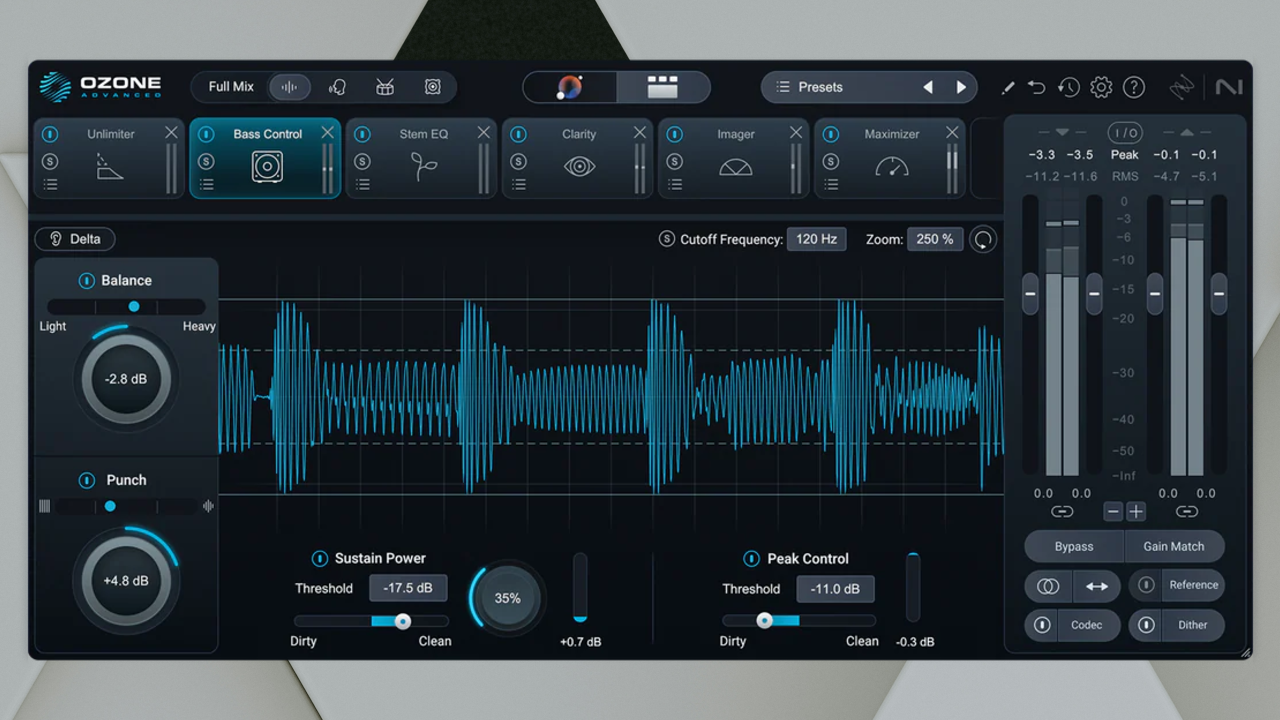
- Bass Control – A dedicated low-end shaping tool aimed at getting your sub and low-mids to actually translate across systems.
- Stem EQ – Lets you EQ vocals, bass, drums and other elements out of the stereo master without having the stems. Yes, really.
- Unlimiter – iZotope’s attempt at “undoing” over-compressed audio. Restoration nerds, listen up.
- Master Assistant – Custom flow – Way more creative control than previous versions. You pick genre profiles, drop in your own references, set a LUFS target, toggle which modules you want involved, and dictate processing strength.
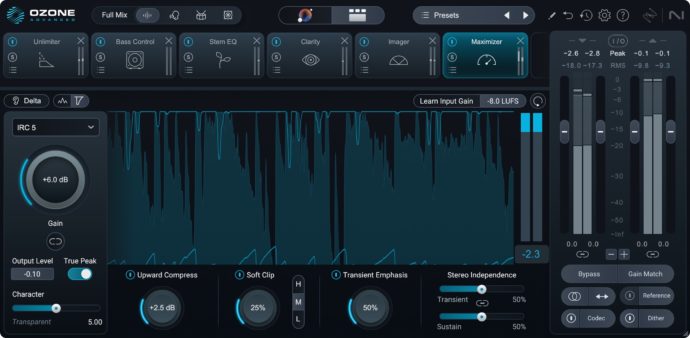
- IRC 5 – The new top-shelf limiting mode in the Maximizer.
That’s a meaningful chunk of new tech, not just a UI refresh. Let’s break down what’s actually worth your attention.
IRC 5 – Worth the price of admission by itself
I’ll just say it: in my opinion, IRC 5 is the best mastering limiting algorithm currently on the market. Period. I was extremely impressed.
For those who haven’t been following the Ozone up-to now, IRC stands for Intelligent Release Control, and it’s the brain inside Ozone’s Maximizer. IRC 4 was already excellent and has been the algorithm a lot of us reach for first when we want a clean, transparent ceiling. IRC 5 is on a different level entirely.
What makes it special is how it handles transients and density at high LUFS targets. When I push masters hard, the kind of levels modern metal and pop releases are demanding right now. IRC 5 just doesn’t fall apart the way other limiters do. There’s no pumping. There’s no smearing. Drum transients hold their shape. The low end stays glued to the rest of the mix instead of getting that weird “limiter is sitting on my kick” thing where the bottom octave just disappears. Vocals stay forward. Cymbals don’t turn into mush. It is the cleanest, most musical limiter I have ever used, and it’s not particularly close.
However, and this is the big asterisk, IRC 5 is also the most CPU-heavy mastering algorithm I’ve ever used. By a noticeable margin. If you’re used to the relatively light footprint of IRC 4 or any of the other modes, brace yourself. On dense sessions, especially when you’re running Ozone as the last instance in an already-busy template, you are going to feel it. I had to bump up my buffer size on a few sessions just to keep things stable while bouncing.
Is the trade-off worth it? For me, absolutely. The sound it gets is so much better than anything else I’ve used that I’m willing to give up the CPU headroom. If you’re running a modern Apple Silicon Mac or a recent high-core-count PC, you’re probably not going to care. If you’re on older hardware, just know that you may need to either freeze tracks, raise your buffer, or run IRC 5 only at the bounce stage. That’s a real consideration, but it’s not a dealbreaker.
I’d buy Ozone 12 for IRC 5 alone. Everything else is a bonus.
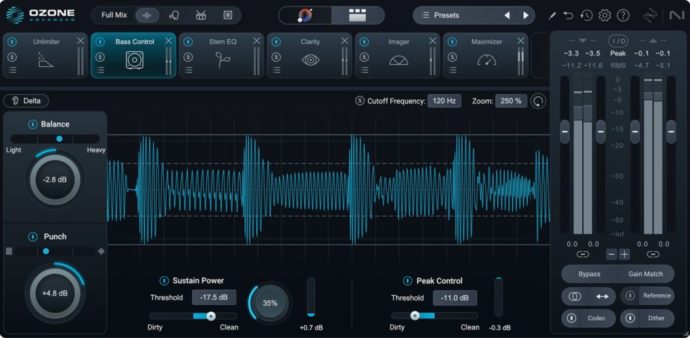
Bass Control – Finally, a real low-end translation tool
Low end is where most home and project studio mixes fall apart, and it’s almost always the thing clients can’t articulate but can absolutely hear. Bass Control is iZotope’s swing at solving that problem inside the mastering chain, and it’s a really thoughtful module. It gives you control over the dynamics, mono compatibility, and tonal balance of your sub and low-mid regions specifically, without you having to surgically EQ and multi-band compress your way to the same result. For metal and rock guys whose mixes routinely have a kick drum, sub-tuned bass guitar, and palm-muted guitars all fighting for the same 60–200Hz real estate, this is genuinely useful.
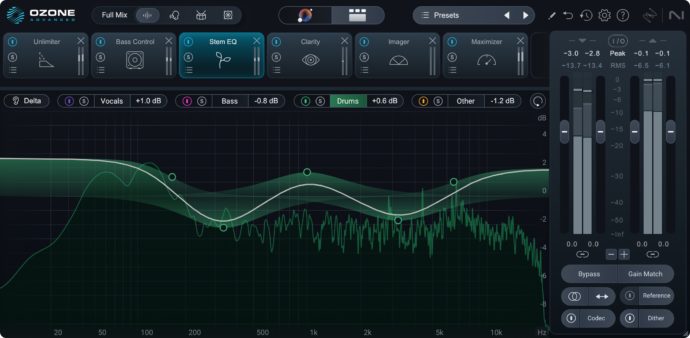
Stem EQ – The “wait, what?” feature
Stem EQ might be the most “show off at NAMM” feature in this release. The pitch is that you can EQ individual elements. Vocals, drums, bass, etc, out of a stereo master without having the stems. I was skeptical, because I’ve seen this kind of source-separation-driven processing oversold before. But it actually works surprisingly well. It’s not magic though, if you push it hard, you’ll hear artifacts but for tasteful corrective moves on a stereo file, it’s a legit problem-solver. Especially useful for mastering engineers who get stuck with bounced stereo files and need to nudge a vocal up by 1.5 dB without re-EQing the whole track. I wish I had this for a Mastering session I had recently where the HiHats in the mix were a little too harsh and there was really not much I could do about it. Next time I will have the tool ready to deal with it.
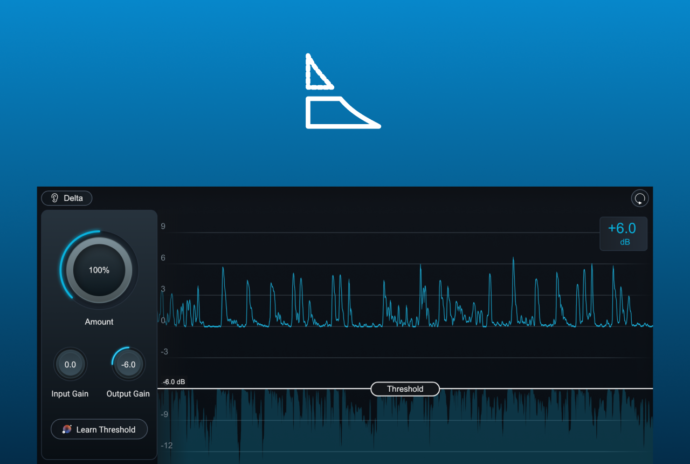
Unlimiter – Undoing the loudness war damage
The Unlimiter is exactly what it sounds like, a tool designed to restore dynamics to audio that’s been crushed beyond recognition. If you do any kind of restoration work, mastering for sync, or just have to clean up a reference some band sent you that they pre-limited to oblivion before you got it, this is going to be a daily driver. Don’t expect miracles on truly destroyed material, but on moderately squashed stuff it’s genuinely impressive.
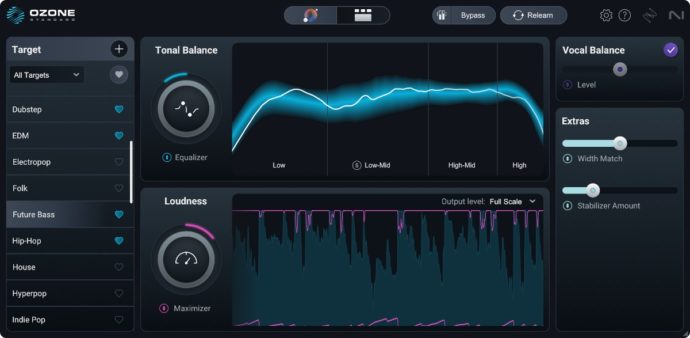
Master Assistant – Custom flow
The Master Assistant has been around for a while, and for years my main complaint was that it was a bit of a black box. You’d hit a button and either like the result or not. The new Custom flow actually gives you a seat at the table. You can pick a genre profile, throw in your own references, set a target LUFS, decide which modules get used, and dial in how aggressively the Assistant processes. It’s the closest thing to “AI as a real assistant” rather than “AI as a magic 8-ball” that I’ve used in this kind of tool. Great starting point for anyone learning, and a genuinely useful jumping-off point for working engineers when you’re staring down a deadline.
Pricing and value
Ozone 12 comes in three tiers:
- Elements – $55
- Standard – $219
- Advanced – $499
If you want IRC 5 and the full set of new tools, you want Advanced. Standard is a solid middle ground for most home producers, but Advanced is where the deepest version of the Maximizer and the full module list lives. iZotope also runs sales constantly, and if you have any prior version of Ozone, the upgrade pricing is usually quite reasonable. Definitely log in and check your upgrade path before you buy at full price.
The verdict
Ozone 12 is the most meaningful Ozone update in years. The new plugins are useful, the redesigned Master Assistant I think is now much more useful, and IRC 5 is, and I’m not exaggerating, the best limiter I’ve ever put on a master bus. The only real catch is the CPU hit IRC 5 takes, and for me that trade-off is more than worth it for the sound it gets.
If you’re a mastering engineer, a producer who masters their own stuff, or even a mix engineer who just wants the best limiter on the market sitting at the end of your chain, Ozone 12 is an easy recommendation. IRC 5 alone is worth the price of admission, and everything else makes it a no-brainer.
That’s it for this one, let me know what you think in the comments below, and especially let me know how IRC 5 is treating your CPU on your system, because I’m curious if my experience is universal.