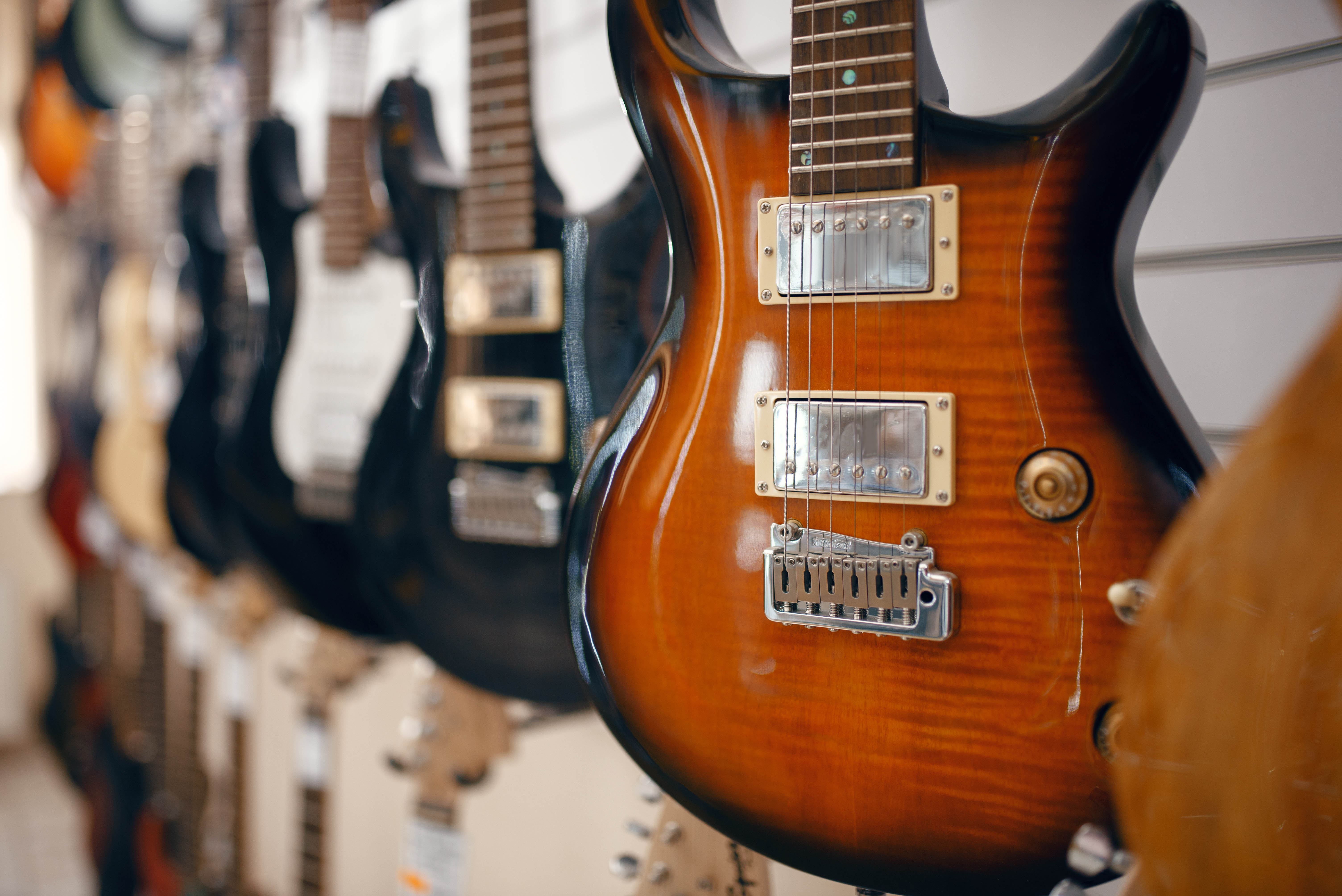
A guitar collection has a funny way of growing beyond its original purpose. You start with one instrument because you want to learn a few songs, and before long, you are debating pickup configurations, neck profiles, scale lengths and whether there is technically room for another case in the closet. Different guitars encourage different approaches to playing, which is exactly why owning several can be worthwhile. Some are built for thick rhythm work, others reward expressive leads, and a few simply make you want to turn the amplifier up louder than your neighbors would prefer. For guitarists building a collection with genuine variety, these five styles deserve serious consideration.
Start With a Bold Classic
Few guitar designs announce themselves from across a room quite like the iconic Flying V guitar. Its sharp, futuristic body shape looked radical when Gibson introduced the model in the late 1950s, and decades of rock and metal history have only strengthened its reputation. Players including Albert King, Jimi Hendrix and Kirk Hammett helped demonstrate that the V was more than a visual stunt. In the right hands, it could become an unmistakable part of a player’s sound and stage presence.
A Flying V is particularly appealing for guitarists who already own more conventional instruments. Its shape makes the collection immediately more interesting, while its humbucker-driven sound offers plenty of power for distorted rhythm playing and soaring leads. The design has become closely associated with hard rock and metal, but blues players have also proven how expressive it can be. You probably will not mistake one for anything else when you open the case, and that is part of the fun.
Own a Great Strat-Style Guitar
There is a reason the double-cutaway Stratocaster silhouette remains one of the most recognizable shapes in music. A quality Strat-style electric can cover an enormous amount of territory without feeling like a compromise. Three pickups and multiple switching positions give players access to sparkling clean sounds, biting leads and those distinctive in-between tones heard across decades of blues, funk, pop and rock recordings.
The design also encourages a different physical approach than heavier, humbucker-equipped guitars. Its contoured body feels comfortable during long sessions, while the tremolo system opens another avenue for expression. Players can use it for gentle chord shimmer or considerably more dramatic effects. Even guitarists who eventually gravitate toward another model often benefit from having a Strat-style instrument nearby. It is one of those guitars that can solve a surprising number of musical problems without demanding much fuss.
Make Room for an Acoustic
An electric-heavy collection can become surprisingly limiting if there is no acoustic guitar in sight. Acoustic instruments expose technique in ways distortion and effects sometimes disguise. Every uneven chord, muted note and heavy-handed strum becomes easier to hear, making regular acoustic playing valuable even for musicians who spend most of their time plugged into an amplifier.
A steel-string acoustic also introduces textures that an electric guitar cannot completely duplicate. Open chords sound broader, fingerpicked passages have a natural intimacy, and songwriting becomes refreshingly simple when there are no pedals or amplifier settings to consider. Guitarists do not necessarily need an expensive vintage instrument, either. A well-built acoustic with comfortable action, stable tuning and a balanced sound can become one of the most frequently played guitars in the house. It is also considerably easier to grab when inspiration arrives at midnight and firing up a full amplifier rig seems like a terrible social decision.
Invest in a Les Paul-Style Guitar
A solid collection should include at least one guitar built around the classic combination of a substantial body and dual humbuckers. Les Paul-style instruments deliver the thick rhythm tones and smooth sustain associated with countless blues, rock and hard rock recordings. They also provide a useful contrast to brighter single-coil guitars, particularly when a song needs more weight or a lead part needs extra body.
Quality matters when shopping for this type of instrument, so don’t buy cheap guitars simply because a bargain model resembles a famous design from several feet away. An inexpensive guitar can absolutely be good, but price should not outrank construction, fretwork, tuning stability and electronics. Try instruments whenever possible and pay attention to how the neck feels before becoming distracted by finishes or logos. A guitar that stays in tune and feels comfortable will earn its place in a collection. One that merely photographs well may spend most of its life decorating a stand.
Add Something With P-90s
Once the obvious bases are covered, a P-90-equipped guitar can introduce an entirely different personality. P-90 pickups occupy an appealing space between traditional single coils and humbuckers. They can sound warm and full without losing their edge, and they respond particularly well when an amplifier begins to break up.
That versatility makes them useful for garage rock, blues, punk, alternative music and classic rock. They can snarl when pushed and clean up surprisingly well when players ease off the volume control. Models inspired by the Les Paul Junior, SG Junior and other stripped-down classics prove that a guitar does not need a complicated control layout to produce memorable sounds.
A collection should ultimately reflect the person playing it rather than a checklist dictated by anyone else. Still, owning guitars with genuinely different designs and pickup configurations gives musicians more sounds to explore and more reasons to play. Start with instruments that fill gaps in what you already own, buy for playability rather than appearances alone, and accept the inconvenient truth most guitarists eventually discover: there is probably always room for one more.